Body
Back Pain and Your Spine: Why Movement Matters More Than Posture
Ravi Kowlessur · 12 June 2026 · 5 min read
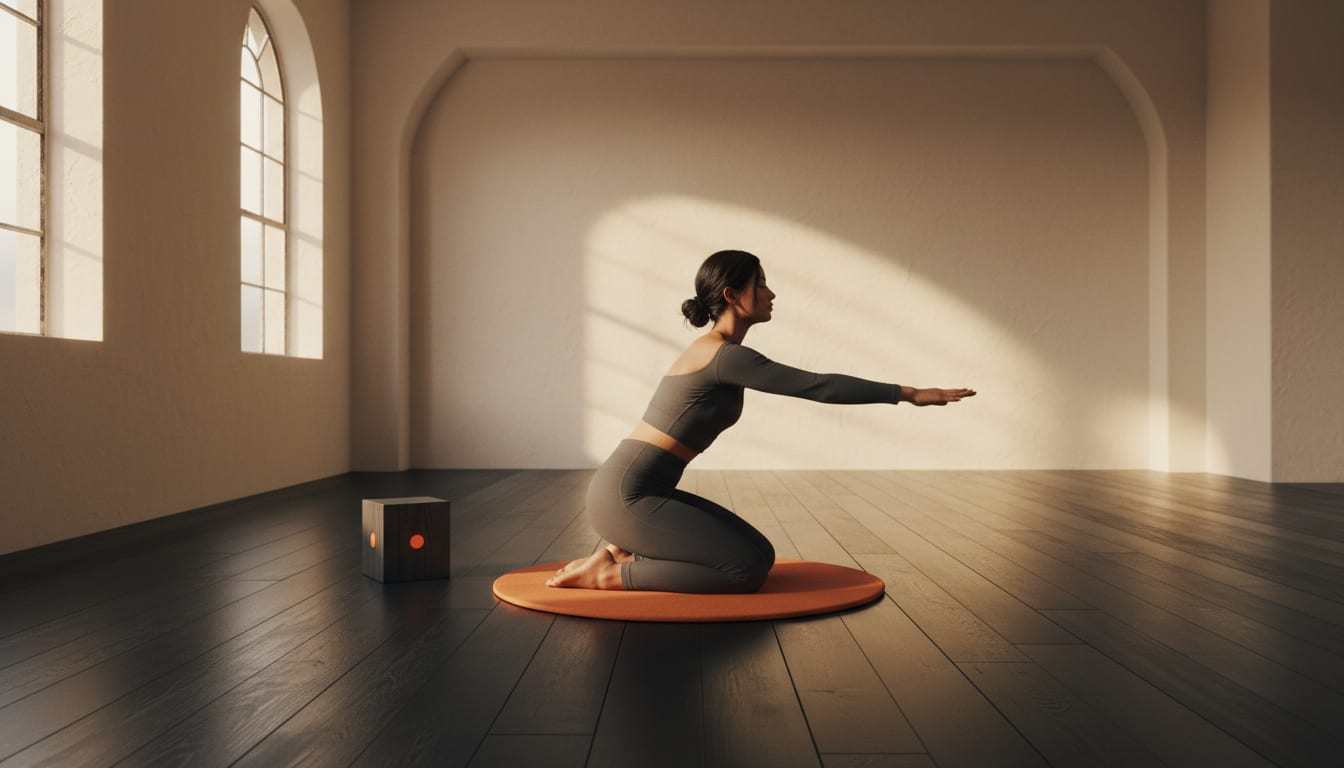
Your back aches by the end of the day and you're not really sure why. Maybe you sat a lot. Maybe you were on your feet. Maybe you slept funny, or lifted something awkwardly, or did nothing out of the ordinary at all. The ache showed up anyway, low and dull, and it's been hanging around.
Back pain is common, and it has plenty of causes. But a large share of the everyday aches people put up with come down to one thing that's easy to miss: a spine that doesn't get to move much. Not weakness, not bad posture, not one wrong movement that "did something". Just a spine stuck doing too little, in too few directions, for too long.
Once you understand that, the fix looks different from what most people try. And it's a lot more doable.
Your spine is built to move in every direction
Think about what your spine can do. It bends forward, leans back, twists to each side, and bends from side to side. It's a stack of small bones with cushioned joints between them, made to move all those ways. That movement is part of how the joints and discs stay healthy. Moving pushes fluid in and out of the soft tissue, a bit like a sponge soaking up water and squeezing it out.
Now think about what most days actually ask of it. Whether you're at a desk, behind a wheel, on the sofa, or looking down at your phone, your spine mostly does one thing: bend forward a little and stay there. The other directions barely get used. Leaning back and twisting almost never happen.
Joints that don't move much get stiff. That stiffness is a big part of what you feel as a tight, sore back. It often isn't damage at all. It's a spine that's only been using a fraction of what it can do.
The problem usually isn't your posture
Most people, when their back hurts, go looking for the thing they're doing wrong. They blame slouching. They buy a better chair, a back support, a standing desk. They try to sit up straight and hold it.
Here's the part that surprises people: there's no single perfect posture that protects your back while you stay still in it. Physios have a saying for this. The best posture is your next one. Any position becomes a problem if you hold it long enough, even a "good" one. If you forced yourself to stand bolt upright all day, your back would complain too.
So the goal isn't finding the right way to sit or stand and locking into it. The goal is to keep changing. Shift in your seat. Stand up to take a call. Get up and walk around between tasks. Variety is what keeps a spine comfortable, far more than any one "correct" position.
A two-minute daily reset
Here's the practical part. Once a day, take your spine through all the directions it's built for. It takes about two minutes and needs no equipment. Morning, lunchtime, or before bed all work. Pick whatever you'll actually remember.
Move slowly and gently through each one. Never force a stretch or push into sharp pain.
| Direction | Simple move | How |
|---|---|---|
| Forward | Standing roll-down | Stand, let your head and arms hang toward the floor, knees soft. Hold a few breaths, then roll up slowly. |
| Backward | Standing back bend | Hands on your lower back, gently arch backward and look up a little. Hold for a few seconds. |
| Twist | Seated rotation | Sit tall, turn your shoulders to one side and hold, then the other. |
| Side bend | Overhead reach and lean | Reach one arm overhead and lean to the opposite side. Swap arms. |
| Roll | Cat-cow on the floor | On hands and knees, arch and round your back slowly, a few times. |
That's the whole thing. You're not trying to cure anything in two minutes. You're reminding your spine of movements it forgot it had. Done most days, it stops the stiffness building up in the first place.
Movement first, then strength
Daily movement handles how your back feels day to day. Strength handles the longer game. A spine that moves well is good. A spine that's also supported by strong hips, glutes, and core copes better with whatever you throw at it: a long day, a heavy bag, picking a kid up off the floor.
The two work together. Moving keeps you loose and out of the everyday ache. Strength, built up slowly over weeks, gives your spine a sturdier frame around it so normal life costs you less. You don't have to pick one. But if you're starting from scratch and sore, get the daily movement going first. It's gentler, and almost anyone can do it safely today.
When back pain needs more than movement
Movement helps the common, dull, stiffness-driven kind of back pain. Some back pain is different, and it's worth knowing where the line is.
If your pain is sharp, shoots down a leg, came on suddenly after a fall or a heavy lift, or comes with numbness, tingling, or weakness, that's a signal to see a doctor or physio rather than stretching through it. The same goes for pain that wakes you at night, or that won't settle no matter what you try.
If you spend most of the day sitting, that is worth measuring rather than guessing at. This check takes two minutes.
For the ordinary, everyday ache, though, the answer is usually less complicated than people fear. Your back doesn't need a perfect chair or a perfect posture. It needs to move, in all the ways it was built to, a little bit every day.
Keep reading
Your guilt trip response is a flinch
Nobody talks you into it. You agree before the thinking part of you arrives, which is why understanding the pattern has never once stopped you doing it.
MindsetYou'd turn down a five-minute workout
Nobody says they haven't got time for a two-minute favour. The phrase only shows up when the thing being asked feels big, which means the problem was never the hour.
RecoveryWhy rest isn't fixing how tired you are
Nothing much happened last week and you still finished it knocked out. The reason isn't that you need more sleep, it's that your body never got told the week was over.